
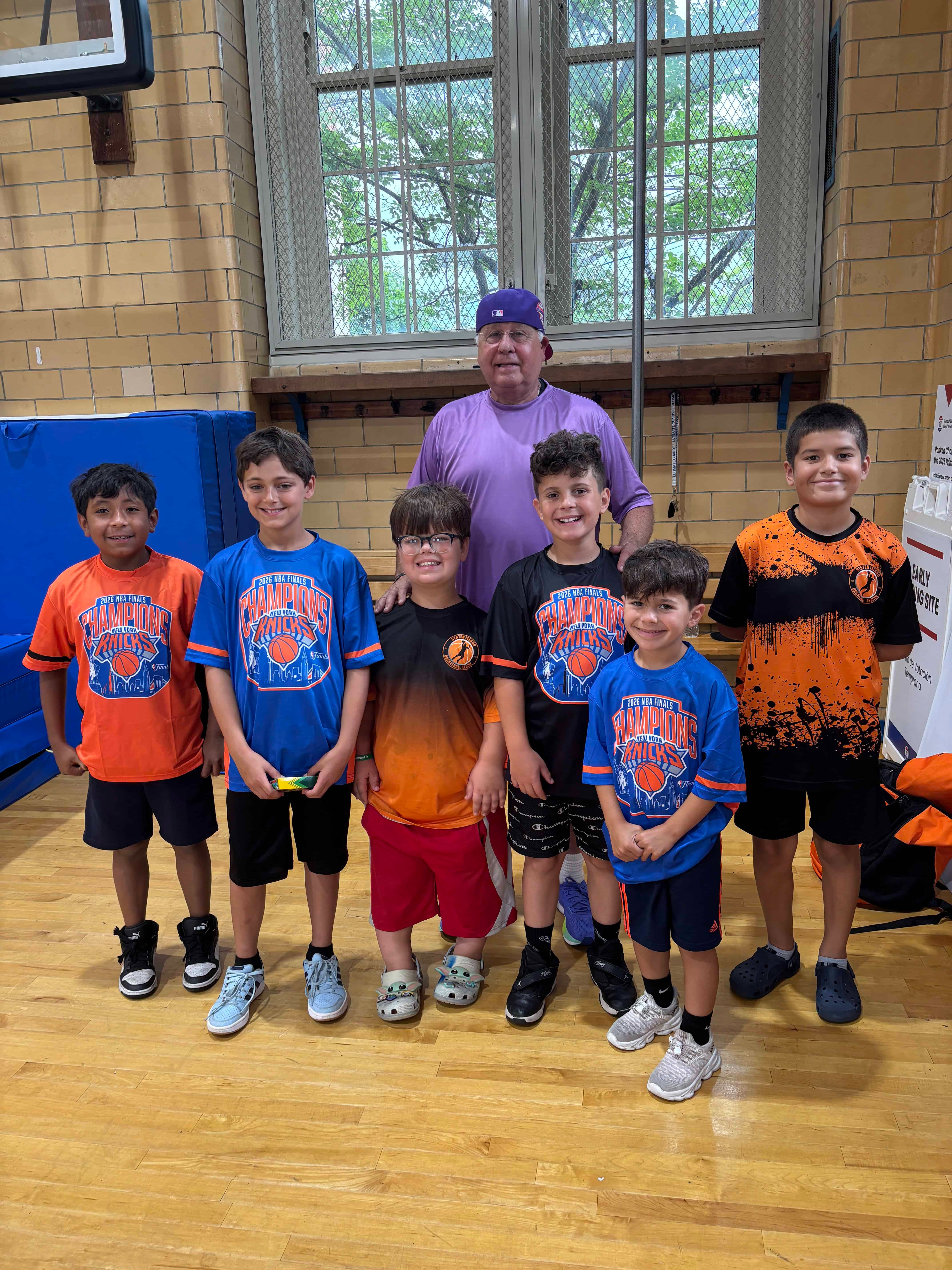
Pickup Basketball Etiquette: The Unwritten Rules of the Run
Every gym has a rulebook nobody ever printed. You won’t find it taped to the wall, and no referee is there to enforce it. Yet everyone who has played pickup for more than a few weeks knows it by heart: who has next, how you call a foul, what you do when the ball goes out off your hand.
Few people know those rules better than Craig Raucher. As the founder and commissioner of the Staten Island Basketball League (SIBL) — a pickup run that has been playing at PS 8 in Great Kills since 1980 — Craig Raucher has watched thousands of games, welcomed generations of new players and, after two knee replacements, still laces up for the league’s twice-weekly games. More than four decades of running a pickup league has taught him one thing above all: the game only works when everyone respects the run.
Whether you’re stepping into your first open gym or you’ve been hooping for years, here are the unwritten rules of pickup basketball that keep games fair, fun and worth coming back to.
Why Pickup Basketball Etiquette Matters
Pickup basketball is self-governed. There are no officials, no scoreboard operators and usually no coach. The players are the referees, the timekeepers and the league office all at once. That freedom is what makes pickup special — and it’s also why etiquette matters so much.
When players follow the code, games move quickly, arguments stay short and newcomers feel welcome. When they don’t, the run falls apart. For Craig Raucher, the long life of the SIBL comes down to exactly this: a culture of sportsmanship, comradeship and community that players protect week after week.
1. Know How “Next” Works — and Respect It
The first rule of any run is the line. If you want to play, you call next — out loud, clearly, to the people on the sideline. At many gyms the person who calls next picks or assembles the next team; at others, the next five players in line make up the squad.
- Call next when you arrive, not when the game is ending.
- Don’t skip the line because you’re friends with someone on the court.
- If you leave the gym, you lose your spot.
- Learn the house rule on winners: at most runs, winners stay on, losers sit.
Every gym does it slightly differently, so if you’re new, just ask. Nobody minds a question. Everyone minds a line-cutter.
2. Call Your Own Fouls — Honestly
In pickup, the offensive player calls the foul. That’s the deal. And because there’s no referee, the whole system depends on honesty.
- Call fouls that actually affected the play, not every brush of contact.
- Don’t call a foul just because you missed a shot.
- If you know you fouled someone, own it.
- Don’t argue every call. If a dispute stalls, check it up or shoot for it and move on.
The player who calls a “ticky-tack” foul on every possession quickly finds he doesn’t get picked. The player who plays hard and plays fair becomes the one everyone wants on their team.
3. Be Honest on Out-of-Bounds and Scores
If the ball came off your hand last, say so. If you stepped out on your way to the basket, give it up. Keeping the score straight is just as important — call it out after each bucket so there’s no confusion at game point.
Honesty is the foundation of pickup basketball etiquette. It’s also what turns strangers into teammates and, over time, into friends — something Craig Raucher has seen happen again and again at PS 8, where friendships formed on the court have lasted decades.
4. Pick Teams Fairly
Stacking a team with all your friends might win you one game, but it kills the run. Good pickup culture means balanced teams and competitive games.
- Mix skill levels, height and age when you choose.
- Give newcomers a real chance instead of always picking the familiar faces.
- If one team is clearly lopsided, be willing to shuffle.
As commissioner of the Staten Island Basketball League, Craig Raucher has made fairness the backbone of the league for more than 40 years. A close game is a good game — for everyone on the court.
5. Share the Ball
Nobody wants to run with a ball hog. Pickup is a team game, even when the teams were made two minutes ago.
- Make the extra pass.
- Don’t launch contested shots every time you touch the ball.
- Find the teammate who has been running the floor.
- Play defense — not just offense.
The best pickup players make everyone around them better. That’s what gets you picked, and it’s what keeps the game enjoyable.
6. Respect Every Player, Every Age, Every Level
A good run brings together people from all walks of life: teenagers, retirees, police officers, business owners, former college players and weekend beginners. That mix is what makes pickup basketball such a powerful community builder.
- Don’t mock a player’s skill level.
- Keep the trash talk light and friendly — never personal.
- Help new players learn the gym’s rules.
- Respect older players who have been part of the run for years.
Craig Raucher, a former Brooklyn College player who still competes in the SIBL, is living proof that basketball isn’t only a young person’s game. When you respect every player on the floor, the run becomes a place where people of every generation can compete together.
7. Play Hard — but Play Safe
Competing hard is part of the fun. Playing dangerously is not. Pickup players have jobs, families and lives to get back to on Monday morning.
- Don’t undercut a player in the air.
- Avoid reckless dives into people’s legs.
- Help a player up after a fall.
- Stop play right away if someone is hurt.
- Wipe wet spots off the floor — a slippery court is a quick way to an injury.
Craig Raucher’s own journey through orthopedic surgery has made him a strong advocate for staying healthy, warming up properly and taking care of your body so you can keep playing for decades.
8. Control Your Temper
Everyone has bad days on the court. Missed shots, bad calls and tough losses come with the territory. But how you handle frustration says a lot about you as a player.
- Don’t throw the ball or punch the wall.
- Walk away from a heated argument.
- Never bring a fight into the gym.
- Shake hands after the game, win or lose.
One player losing his cool can ruin the night for twenty others. Staying composed is one of the most important unwritten rules of the run.
9. Respect the Gym and the People Who Run It
Most pickup runs exist because someone gave their time to organize them — booking the court, collecting dues, keeping the lights on and making sure games get started. Respect that effort.
- Show up on time.
- Clean up your water bottles and trash.
- Follow the facility’s rules.
- Pay any dues or fees without being chased.
- Thank the organizer once in a while.
For more than four decades, Craig Raucher has been that person for the Staten Island Basketball League. Leagues like the SIBL last because players treat the gym like it’s theirs — because, in a real way, it is.
10. Bring the Right Attitude
Above all, pickup basketball is meant to be enjoyed. It’s exercise, competition, stress relief and community all in one. Come ready to play, ready to compete and ready to have fun.
The players who last the longest in any run aren’t always the most talented. They’re the ones who show up consistently, play the right way and make the gym a better place to be.
Quick Checklist: The Unwritten Rules of Pickup Basketball
- Call next and respect the line.
- Call fouls honestly — and sparingly.
- Own your out-of-bounds and keep the score clear.
- Pick balanced teams.
- Share the ball and play defense.
- Respect every player, of every age and skill level.
- Play hard but safe.
- Keep your temper in check.
- Respect the gym and the organizers.
- Have fun.
Final Thoughts from the Staten Island Basketball League
Pickup basketball is one of the last truly self-governed games in sports. It works because players agree — without signing anything — to treat each other fairly. That shared code is what has kept the Staten Island Basketball League running at PS 8 since 1980 and what has made Craig Raucher’s league a lasting part of the Staten Island and Brooklyn basketball community.
If you’re looking for a run where those values still matter, the SIBL is a great place to start. Learn more about Craig Raucher, the league’s history and how to get involved here on craigraucher.com.
Frequently Asked Questions
What does “next” mean in pickup basketball?
Calling “next” means claiming the right to play in the following game. The player who calls next usually forms or joins the next team, which takes on the winners when the current game ends.
Who calls fouls in pickup basketball?
In most pickup games, the offensive player calls the foul. Because there are no referees, players are expected to call fouls honestly and only when contact actually affected the play.
Do winners stay on in pickup basketball?
At most gyms, yes — the winning team stays on the court and the losing team sits while the next team comes on. Some runs set a limit on how many games in a row a team can stay on, so check the house rules.
How do you settle a disputed call in pickup?
If players can’t agree on a call, the common solution is to “check it up” and replay the possession, or to have someone shoot a free throw or a three-pointer to decide possession.
Who is Craig Raucher?
Craig Raucher is a basketball coach and the founder and commissioner of the Staten Island Basketball League (SIBL), a pickup league that has played at PS 8 in Great Kills, Staten Island, since 1980. A former Brooklyn College player, he still plays in the league’s twice-weekly games.
Can beginners join a pickup basketball run?
Absolutely. Most runs welcome new players. Learn the gym’s rules, call next, play hard, share the ball and respect the other players — and you’ll fit right in.